Beyond the Algorithm: Why Human Designers Still Matter In the Age of AI
AI is not coming for design. It is already here.
It is built into mainstream creative tools and used to generate visuals, explore directions faster, edit assets, produce variations, and speed up production workflows. Adobe now positions Firefly as a faster way to brainstorm, iterate and work across Creative Cloud; Canva pushes AI design tools directly inside the editor; and image generation tools are now good enough to produce high-quality visuals from prompts in minutes.
So yes, things have moved on.
The old debate about whether AI will “enter” design is finished. It already has.
The more useful question now is this:
If AI can generate design outputs faster than ever, where does that leave actual designers?
In my view, still in a very important place.
Because design was never just about making things look presentable.
That is where people get this wrong.
AI is very good at producing. That is not the same as designing
This is the bit worth separating properly.
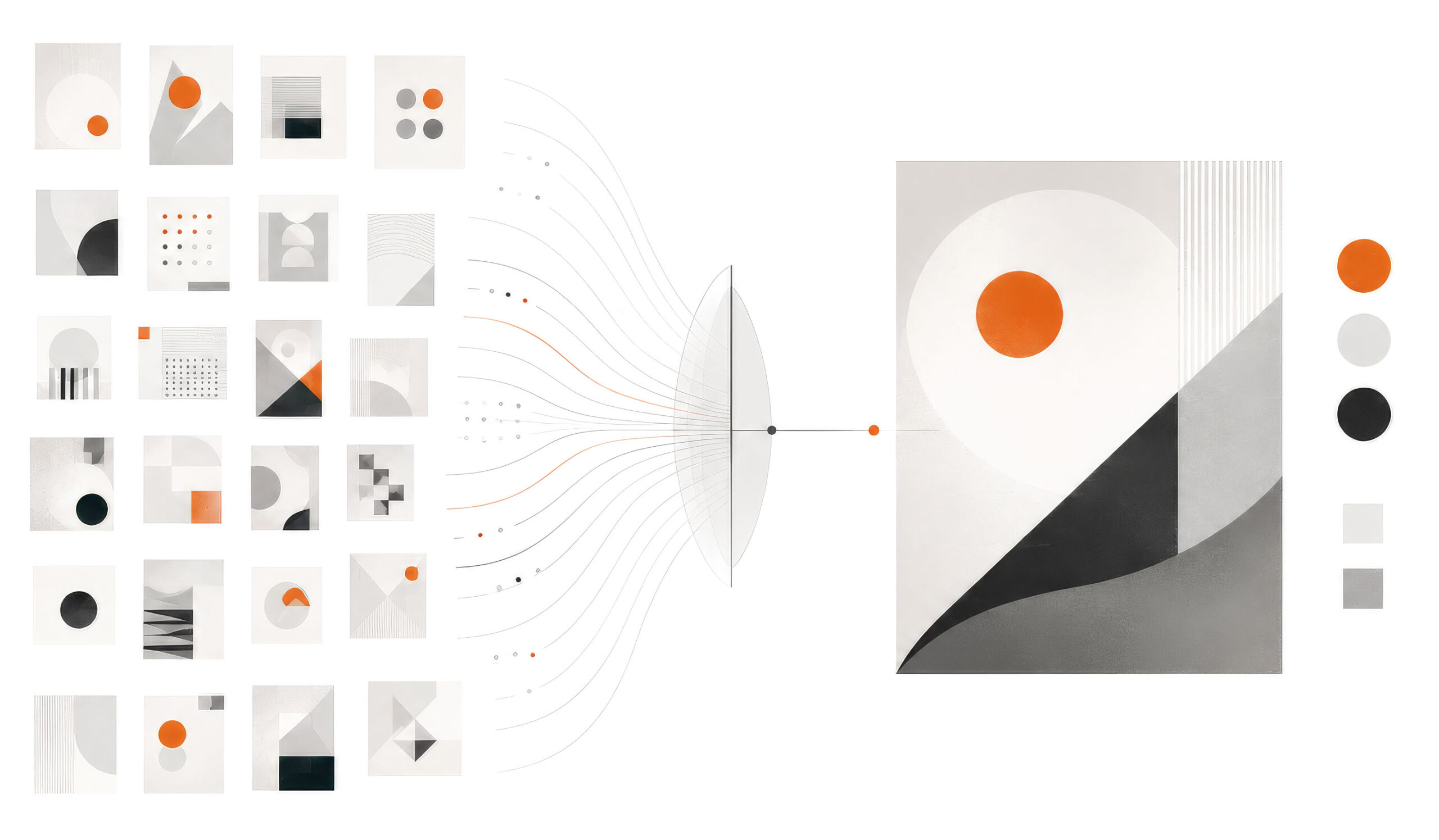
AI is getting very good at helping people produce visual assets. It can help with concepts, layouts, image variations, editing, repurposing and speed. That is real. Pretending otherwise would be daft. Adobe, Canva and OpenAI all position these tools around faster ideation, iteration and content production.
But production is not the same as design.
Design is not just output.
Design is judgement.
Design is prioritisation.
Design is understanding what needs saying, what needs emphasising, what needs simplifying, and what needs to be left out.
That bit does not come from a prompt alone.
You can get AI to generate something polished. That does not mean it is strategically right. It does not mean it suits the business. It does not mean it properly supports the brand. It does not mean it will land with the right audience.
That is where human designers still matter.
The real value is not in making visuals. It is in making decisions
Many people still treat design as the final layer.
Nice colours. Nice layout. Better images. Job done.
That is surface thinking.
The stronger designers are not just there to decorate the work. They are there to make decisions that shape how the business comes across.
- What are we really trying to say?
- Who are we trying to connect with?
- What needs to feel clear straight away?
- What needs to feel credible?
- What needs to feel distinctive?
- What will quietly undermine trust if we get it wrong?
That is not a software problem. That is a thinking problem. And that is why human judgement still carries so much weight.
AI can imitate patterns. It cannot carry commercial responsibility
This matters more than people realise.
AI is brilliant at drawing from what already exists. It can remix styles, structures, compositions and formats at speed. That makes it useful.
But useful is not the same as accountable.
A designer has to make a call on whether something is right for the brief, right for the audience, right for the brand, and right for the commercial goal.
That means understanding context.
Not just “make it look modern.”
Not just “make it pop.”
Not just “give me three options.”
Proper design work involves reading between the lines, spotting weak thinking, pushing back when needed, and solving the actual problem rather than just producing a prettier version of it.
That is still human work.
We have seen a version of this before
This is one reason I am not especially rattled by the whole thing.
We saw a similar shift when design software became widely available. Suddenly loads more people had access to the tools, and plenty assumed that meant they had the craft as well.
It did not.
Having Photoshop did not make someone a designer.
And using AI does not make someone a designer either.
It just gives them faster access to output.
Sometimes that output is perfectly usable. Sometimes it is surprisingly good. Sometimes it is absolute tat.
But the bigger point still stands.
Access to tools is not the same as depth of thinking.
Good design still needs taste, restraint and a point of view
This is where the gap shows up.
AI can give you options. Often loads of them.
But someone still needs to know which direction is worth pursuing, which one feels generic, which one misses the brief, which one says the wrong thing, and which one may look nice but quietly weaken the brand.
That is where taste comes in.
And taste is not just a matter of personal preference. It is informed judgement. It is knowing when something feels right for the job, and when it does not.
It is also restraint.
A lot of weak design is not due to poor tools. It is weak because no one made the right decisions. Too much going on. Too much decoration. Too much noise. Not enough clarity.
AI can accelerate output. It can also accelerate bad decisions if no one is steering properly.
The bigger risk is not AI replacing designers. It is businesses mistaking output for value
That is the bit I think matters most.
The danger is not really that AI makes design impossible as a profession.
The danger is that businesses start to believe that fast output is the same as effective design.
It is not.
A design that looks presentable but says the wrong thing is still weak.
A website that looks modern but does not build trust is still weak.
A brand identity that feels polished but lacks clarity is still weak.
That is why experienced designers still matter.
Not because they are the only people who can make things look good.
Because they are the ones who should be helping businesses make sure the work is actually doing its job.
So where does AI fit?
For me, AI is a tool.
A useful one.
It can help explore faster, test directions, build momentum, save time, and remove some of the grind from production. That is valuable. Used properly, it can absolutely support a stronger workflow. Adobe explicitly frames Firefly around faster ideation and production, while Canva leans into turning AI-generated ideas into editable layouts.
But it still needs steering.
It still needs someone to ask the harder questions.
It still needs someone to decide what matters.
It still needs someone with enough commercial sense, design judgement and brand awareness to stop the work drifting into generic, off-message or just plain wrong territory.
That is why I do not see this as human versus machine.
I see it more as this:
AI can help make things. Human designers are still the ones who should ensure those things are worth making.
The real diagnosis
So no, I do not think human designers have become irrelevant.
Far from it. If anything, the rise of AI makes judgement more valuable, not less.
Because when the ability to generate output becomes easier, the real differentiator shifts even further towards thinking, taste, clarity and decision-making.
And that is still where the best designers earn their keep.
Not by guarding the tools.
By knowing what to do with them.